Physical Address
304 North Cardinal St.
Dorchester Center, MA 02124
Physical Address
304 North Cardinal St.
Dorchester Center, MA 02124

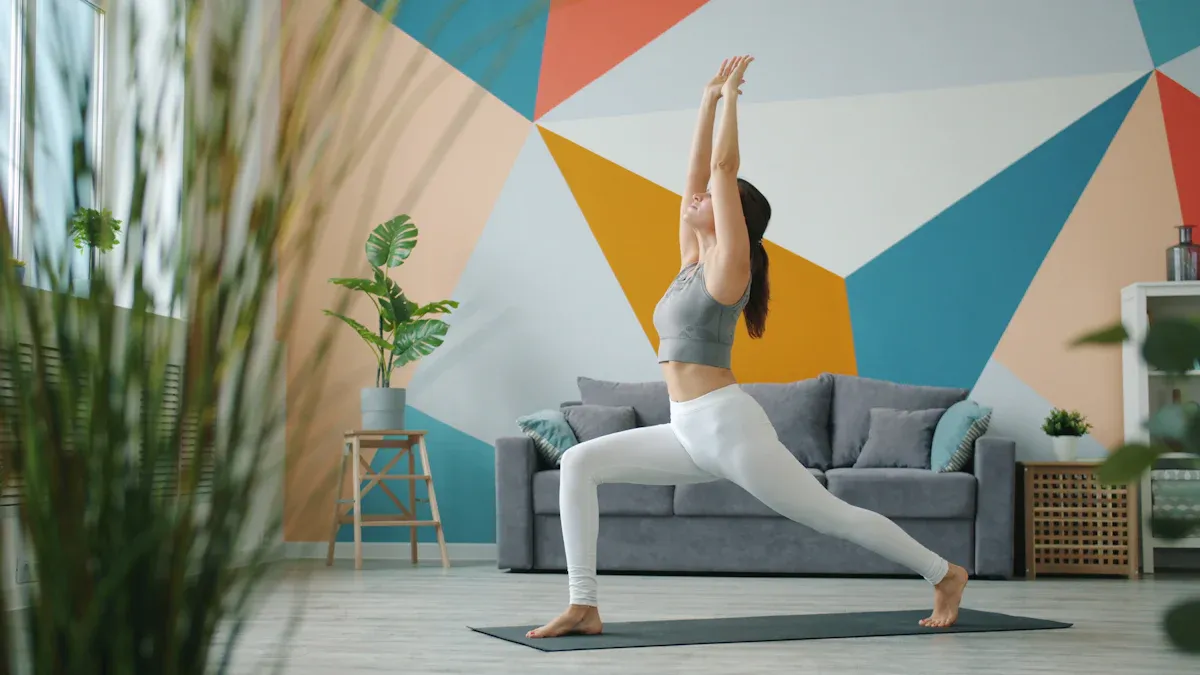
Start your yoga journey with beginner yoga poses. Follow step-by-step instructions for safe, effective practice and build strength, balance, and flexibility.
Did you know that one out of three adults in the U.S. has tried yoga at least once?
Source | Percentage of Adults Tried Yoga |
|---|---|
Yoga Journal | 21% (in the past year) |
Book Retreats | About 33% (at least once) |
People start yoga for many reasons:
You do not need to be flexible.
It can improve posture and strength.
It teaches you to notice your breath.
It helps lower stress.
You can try yoga poses to feel stronger, calmer, and more focused.
Yoga is good for your body and mind. It can make you stronger and more flexible. Yoga also helps lower stress. Doing yoga often can help you feel better overall.
Begin with easy poses like Mountain Pose and Downward Facing Dog. These basic poses help you get stronger. They also help you feel more sure of yourself.
Pay attention to your body and stay safe. Work at your own speed and use props if you need them. Yoga is about how you feel, not how you look.
A lot of people enjoy yoga poses for many reasons. Yoga can help your body and mind in different ways. Studies show yoga can make you healthier, even if you are new. You might get stronger, more flexible, and have better balance. Yoga can also be good for your heart. One review looked at 37 studies. People who did yoga had lower blood pressure, cholesterol, and lost weight. These changes are like what you get from fast walking or other workouts.
Yoga helps your mind as well as your body. If you practice often, you might:
Feel less stress
Think more clearly
Sleep better at night
Focus longer at school or work
Have a better mood
Understand your feelings better
“Yoga has a special mix of moving your body and deep breathing. It also uses meditation and mindfulness. This mix helps your body by making you more flexible. It is good for your heart and brain. Over time, your mind and feelings can get better too. That is very valuable.”
If you are new to yoga, you might feel nervous. That is okay! In your first month, you will work on stretching, strength, and moving in new ways. Many people start with a 30-day plan that uses different stretches. This helps you get stronger and more flexible at your own speed.
You might have some problems at first. Here are some common ones:
Challenge | Description |
|---|---|
Picking the wrong class | Hard classes can be too much. Start with beginner classes. |
Meeting the instructor | Come early and talk to your teacher about health issues. |
Standing in the wrong place | Choose a spot where you can see and follow along. |
Wearing the wrong clothes | Wear comfy, stretchy clothes so you can move easily. |
Feeling unsure | Yoga is about your own progress, not about others. |
Having a different idea | Yoga is not just meditation. It also has movement and breathing. |
If you feel unsure, try other teachers or classes. Pick poses that feel good for you. Do not compare yourself to anyone else. Yoga is your own path, and every step matters.
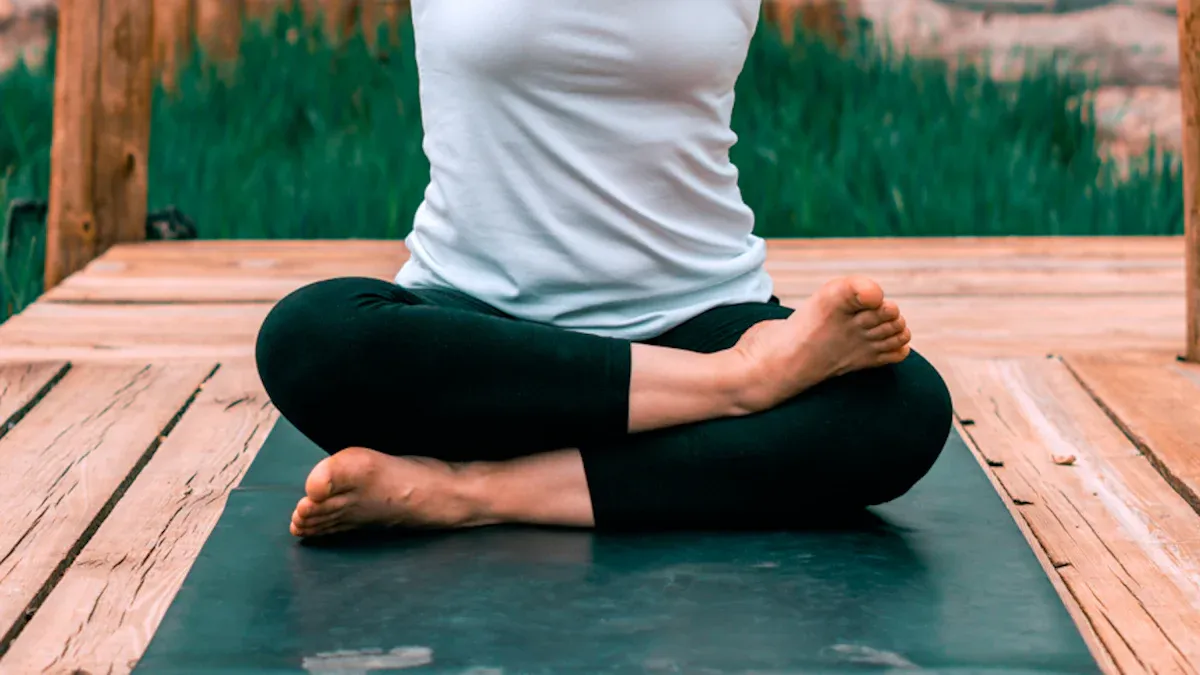
Ready to try some yoga poses? These are the most popular and beginner-friendly moves. You can practice them at home or in a class. Each pose helps your body in a different way. Let’s walk through each one step by step.
Mountain Pose, or Tadasana, looks simple, but it builds strength from your feet all the way up to your head. You stand tall and steady, like a mountain. This pose helps you feel grounded and confident.
Benefits:
Improves posture and body alignment
Helps you breathe better
Corrects posture and highlights muscle imbalances
Prepares you for other yoga poses
Common Mistakes in Mountain Pose | Corrections |
|---|---|
Not engaging your whole body | Engage all muscles to feel energy flowing through you |
Feet pointed outwards | Keep feet grounded and weight even on both feet |
Weight on heels or balls | Distribute weight evenly |
Over-arched lower back | Keep pelvis neutral |
Slouching shoulders | Pull shoulders back and down |
Inactive arms and legs | Engage arms, hands, legs, glutes, and core |
How to Do It:
Stand with your feet together or hip-width apart.
Press your feet into the ground.
Lift your kneecaps and engage your thighs.
Lengthen your spine and reach the top of your head toward the ceiling.
Relax your shoulders down and back.
Let your arms hang by your sides, palms facing forward.
Take a few deep breaths and feel strong.
Tip: Try Mountain Pose before other yoga poses to set your posture and focus.
Downward Facing Dog, or Adho Mukha Svanasana, is a classic pose in many yoga flows. You make an upside-down “V” shape with your body. This pose stretches your back, legs, and arms.
Muscle Group | Role in Downward Facing Dog |
|---|---|
Arms and Deltoids | Support your body weight and keep elbows straight |
Trapezius | Lift and retract your shoulder blades |
Core | Stabilize your trunk and help you balance |
Leg Muscles | Bear weight and keep you steady |
Keep your knees bent and heels lifted if your hamstrings feel tight.
Place your hands shoulder-width apart and feet hip-width apart.
Press your palms into the ground to lengthen your spine.
Relax your head and neck.
If your wrists hurt, drop your elbows to the floor and clasp your hands.
Use blocks under your hands for extra support.
How to Do It:
Start on your hands and knees.
Spread your fingers wide and press your palms into the mat.
Tuck your toes and lift your hips up and back.
Try to straighten your legs, but keep a bend in your knees if needed.
Let your head hang between your arms.
Hold for a few breaths.
Try “Wall Dog” by placing your hands on a wall if you want to focus on your shoulders and chest.
Child’s Pose, or Balasana, is a resting pose. You kneel and fold forward, letting your body relax. This pose helps you recover and reconnect with your breath.
Benefits Table:
Benefit | Description |
|---|---|
Relieving muscle tension | Stretches your lower back and hips, easing tightness. |
Mind-body connection | Calms your mind and helps you focus on breathing. |
Stimulating digestion | Gentle pressure on your belly can help your digestion. |
Accessibility | Easy for most beginners and builds confidence. |
Stretches your back, glutes, quads, knees, and ankles.
Relaxes your body and mind.
Relieves stress, fatigue, and headaches.
“Like all restorative yoga poses, Balasana promotes relaxation. It slows down your parasympathetic nervous system, allowing your body to stretch and relax.”
How to Do It:
Kneel on the mat with your big toes touching and knees apart.
Sit back on your heels.
Fold forward and rest your forehead on the mat.
Stretch your arms forward or let them rest by your sides.
Breathe deeply and relax.
Cat-Cow is a gentle flow between two poses. You move your spine up and down, like a cat and a cow. This flow wakes up your back and helps you move better.
Benefits:
Improves spinal flexibility
Supports better movement and balance
Strengthens your core
Reduces pain and risk of injury
How to Do It:
Start on your hands and knees.
For Cow Pose: Inhale, drop your belly, lift your head and tailbone.
For Cat Pose: Exhale, round your back, tuck your chin and tailbone.
Move slowly between these two shapes for several breaths.
Cat-Cow is great for warming up before other yoga poses.
Warrior I, or Virabhadrasana I, builds strength and confidence. You step one foot forward and bend your knee, while your back leg stays straight. Your arms reach up high.
Common Mistakes and How to Avoid Them:
Arching your back: Keep your spine straight.
Raising your shoulders: Relax them away from your ears.
Compressing your neck: Keep your chin level.
Incorrect foot placement: Place feet hip-width apart and angle them correctly.
Misaligned front knee: Stack your knee over your ankle.
Feet too far apart: Use a shorter stance for balance.
Chest too far forward: Keep your spine tall and shoulders over hips.
Not pressing through back heel: Push down through your back heel for stability.
How to Do It:
Stand tall, then step one foot forward.
Bend your front knee so it’s over your ankle.
Keep your back leg straight and press your heel into the mat.
Raise your arms overhead, palms facing each other.
Face forward and hold for a few breaths.
Switch sides.
Warrior I helps you feel strong and focused.
Seated Forward Bend, or Paschimottanasana, stretches your back and legs. You sit with your legs straight and fold forward.
Benefits:
Improves flexibility in your hamstrings and hips
Supports spinal health and posture
Reduces stress and balances hormones
Builds patience and emotional strength
Connects your mind and body
How to Do It:
Sit with your legs straight in front of you.
Flex your feet and sit up tall.
Inhale and reach your arms up.
Exhale and fold forward from your hips, reaching for your feet or shins.
Keep your back long and avoid rounding your spine.
Hold and breathe.
Don’t worry if you can’t touch your toes. Just reach as far as you can.
Bridge Pose, or Setu Bandhasana, lifts your hips off the ground. This pose strengthens your back, glutes, and legs.
Safety Tips:
If you have neck or back pain, keep your head and shoulders down and don’t lift your hips too high.
Use a block or blanket between your thighs if your knees or hips hurt.
Lift your hips only a little if you’re new.
If your shoulders feel tight, keep your arms by your sides.
Keep the natural curve of your neck and look at the ceiling.
Don’t turn your head to the side.
How to Do It:
Lie on your back with your knees bent and feet flat on the floor.
Place your arms by your sides.
Press your feet into the mat and lift your hips up.
Keep your knees over your ankles.
Hold for a few breaths, then lower down.
Bridge Pose is a gentle way to build strength and open your chest.
The Sunrise Salutation Flow is a sequence of yoga poses that wakes up your whole body. It’s a great way to start your day.
Steps:
Mountain Pose (Tadasana): Stand tall at the top of your mat.
Chair Pose (Utkatasana): Inhale, bend your knees, and reach your arms up.
Standing Forward Bend (Uttanasana): Exhale, straighten your legs, and fold forward.
Half Forward Bend (Ardha Uttanasana): Inhale, lift your torso halfway up.
Half-Plank (Chaturanga Dandasana): Exhale, step back to plank and lower halfway.
Upward-Facing Dog (Urdhva Mukha Svanasana): Inhale, roll over your toes and press your arms straight.
Downward-Facing Dog (Adho Mukha Svanasana): Exhale, lift your hips up and back.
Try this flow a few times in a row. It helps you build strength, flexibility, and focus.
These beginner yoga poses form the foundation of a safe and effective practice. You can mix and match them or follow the Sunrise Salutation Flow for a full-body stretch. Remember to listen to your body and enjoy the journey!
Before you jump into yoga poses, take a few steps to set yourself up for success.
Arrive at least 10 minutes early if you’re going to a class. This gives you time to settle in and relax.
Wear comfortable clothes that let you move easily.
Bring a water bottle so you can stay hydrated.
Pick a spot in the room that feels right for you.
Let your instructor know if you’re new or have any injuries.
Arriving early helps you get in the right mindset. Respect others’ space and focus on your breath. This makes your practice better for you and everyone around you.
Good alignment keeps you safe and helps you get the most from each pose.
Take it slow and listen to your body. If something feels off, adjust your position.
Use props like blocks or straps to help with balance and support.
Start with beginner classes and focus on your form.
Warm up before you begin to loosen your muscles.
Build strength and flexibility over time—there’s no rush.
You want to avoid injuries and enjoy your practice.
Never push through pain. If something hurts, stop and rest.
Don’t worry about how the pose looks. Pay attention to how it feels.
Use props—they help you practice safely.
Remember to breathe mindfully. Holding your breath can make poses harder and less safe.
Stay present and avoid distractions.
Mark Stephens, a yoga teacher, says, “The idea is to slow down and participate more consciously—to pay attention and be more present.” When you move between poses, go slowly and focus on your breath. This helps you stay safe, especially in flows like the Sunrise Salutation.
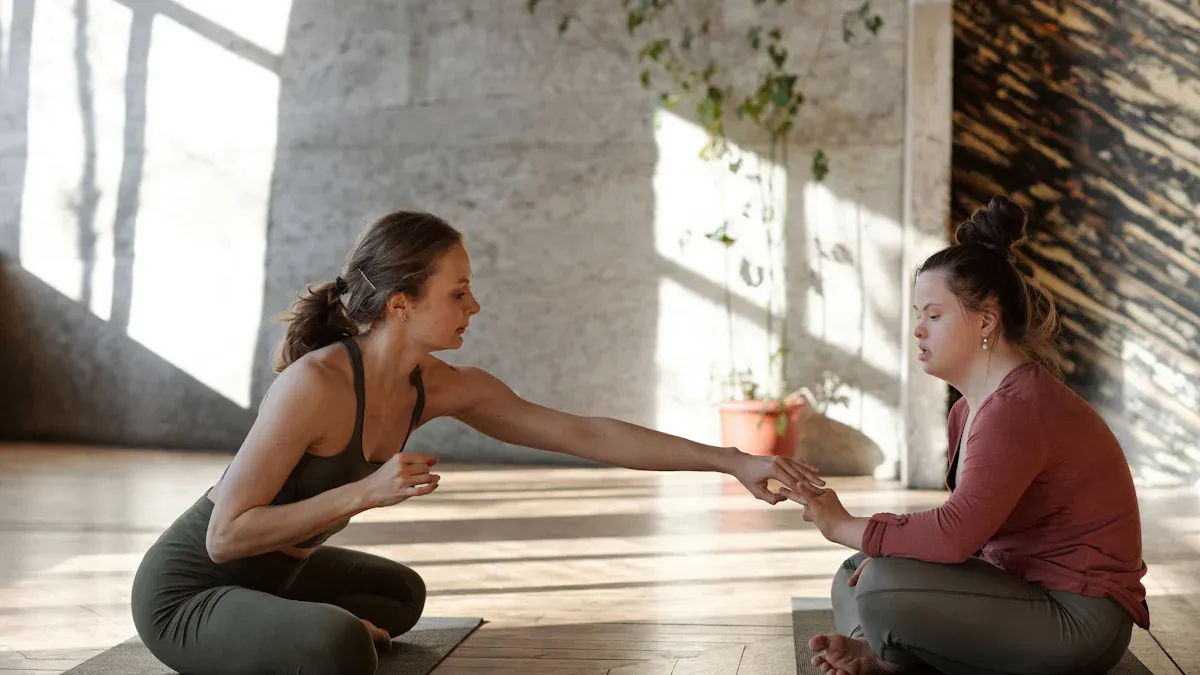
You want your yoga journey to feel good and safe. Here are three top safety tips for practicing at home:
Be patient with yourself. Let your body grow stronger and more flexible over time. Don’t rush into deep stretches or hard moves.
Avoid competition. Yoga is about your own progress. Focus on how you feel, not what others can do.
Mind your joint alignment. Check that your knees line up over your middle toes. This helps protect your knees from injury.
Remember: If something hurts, stop and check your form. Your body knows best.
Everyone makes mistakes when starting something new. You can avoid many of them by staying aware. Here are some frequent slip-ups and how to fix them:
Picking classes that are too hard—choose beginner-friendly options.
Rushing through poses—move slowly and pay attention to your body.
Ignoring pain—pain means you should pause and adjust.
Forgetting to ground your body—press your hands and feet into the mat.
Not using your core—tighten your belly for balance.
Worrying too much about perfect form—listen to your body’s needs.
Holding your breath—breathe deeply and match breath to movement.
Overthinking—trust yourself and enjoy the moment.
Tensing up—relax your face, neck, and shoulders.
Trying to do too much too soon—take small steps.
Being too hard on yourself—celebrate your progress.
Tip: Progress happens one step at a time. Celebrate small wins!
You don’t need fancy gear to start yoga, but a few basics help a lot:
Yoga mat: Gives you grip and cushions your body.
Comfortable clothes: Stretchy clothes let you move freely.
Yoga blocks: Help you reach the floor and support your balance.
Yoga straps: Make stretches easier and safer.
Blanket or bolster: Adds comfort for sitting or resting.
Meditation cushion: Supports your hips during seated poses.
A yoga mat is the most important. It keeps you from slipping and makes practice more comfortable, especially on hard floors.
Start simple. Add more equipment as you discover what feels best for you.
Starting with beginner yoga poses gives you more flexibility, strength, and balance. You also feel less stress and sleep better. Try setting small goals and create a space just for yoga. You can find beginner guides, classes, and online resources.
Make yoga part of your day and watch your confidence grow!
You can start with two or three days each week. Try short sessions. Your body will get stronger and more flexible over time.
You do not need to be perfect. Focus on how your body feels. Use props or change the pose so it works for you.
You only need a yoga mat. Blocks, straps, or blankets help, but you can use things you already have at home.