Physical Address
304 North Cardinal St.
Dorchester Center, MA 02124
Physical Address
304 North Cardinal St.
Dorchester Center, MA 02124

Weight loss injections help control appetite and blood sugar, leading to steady weight loss. Learn what to expect, results timeline, and side effects.
You may have heard about weight loss injections as a tool for managing weight. Many people turn to this option when other methods do not give the results they want. In the United States, about 6% of adults—around 15.5 million people—have tried injectable medicines for weight loss. People often choose these injections for their effectiveness and health benefits.
Common Questions | Quick Answers |
|---|---|
How do they work? | |
Are they safe? | Doctors monitor you for safety. |
What results can you expect? | Results vary, but many see changes in a few weeks. |
You are not alone if you have questions or concerns. This article offers clear facts to help you make an informed choice.
Weight loss injections help you feel less hungry. They also help control blood sugar. This can make losing weight easier. Most people feel less hungry in two weeks. You may see weight loss in about four weeks. Some people feel sick or have stomach problems. These side effects usually get better later. You need a BMI of 30 or more to get injections. You can also get them with a BMI of 27 and health problems. Talk to your doctor about your health goals. Your doctor can help you decide if injections are good for you.
Weight loss injections use medicines that act like hormones in your body. These medicines copy a hormone called GLP-1. GLP-1 helps you feel full and controls insulin. You eat less because you feel full faster. Scientists learned GLP-1 works in two ways. It helps your brain and body balance hunger and energy. It helps your body release insulin to keep blood sugar steady. These actions make weight loss injections helpful for people who want to lose weight.
Weight loss injections change how your body handles hunger and energy. You may not want high-calorie foods as much. Your stomach empties slower, so you stay full longer. Your body uses more stored fat for energy, especially with medicines like tirzepatide. The table below shows how these injections work in your body:
Mechanism | Description |
|---|---|
Appetite Suppression | Tells your brain to lower hunger, so you eat less. |
Slowed Gastric Emptying | Keeps food in your stomach longer, so you feel full. |
Improved Blood Sugar Control | Helps your body release more insulin and lowers blood sugar spikes. |
Fat Utilization | Helps your body burn more stored fat for energy. |
You may feel less hungry in the first week or two after your first shot. Many people feel full faster by week two. Some people notice bigger changes in their appetite between four and twelve weeks.
Tip: Write down your hunger and fullness each week. This helps you see changes and keeps you motivated.
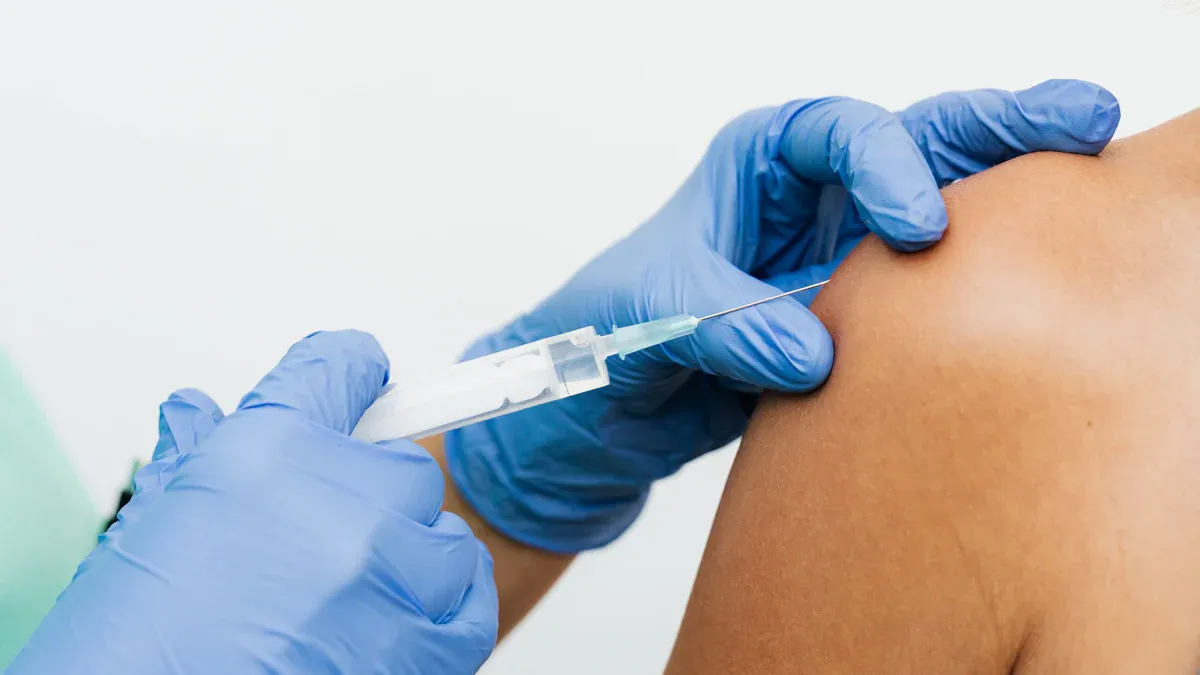
You get weight loss injections as a shot under your skin. Most people take these shots once a week. Your healthcare provider will show you how to do it. You can give yourself the shot at home. The process is quick and takes about five to fifteen minutes. Here is what you can expect:
Step | Details |
|---|---|
Method of Administration | Subcutaneous injection (under the skin) |
Frequency | Once a week |
Self-Administration | You can give yourself the shot after learning from your healthcare provider |
Preparation Instructions | Follow the instructions that come with your prescription |
Always follow your provider’s instructions for safety and best results.
You may wonder when you will start to see changes after starting weight loss injections. Most people notice a difference in their appetite within the first two weeks. Visible weight loss often begins after about four weeks. The amount of weight you lose can increase as you continue treatment. Clinical studies show a steady pattern of weight loss over time. Here is a table that shows the average weight loss at different stages when using semaglutide:
Time Frame | Average Weight Loss (%) | Dosage of Semaglutide |
|---|---|---|
4 weeks | 2% | 0.25 mg |
8 weeks | 4% | 0.5 mg |
3 months | 6.3% | 1.0 mg |
52 weeks | 14-16% | 2.4 mg |
104 weeks | 15.2% | Maximum dose |
You can also see this trend in the chart below:
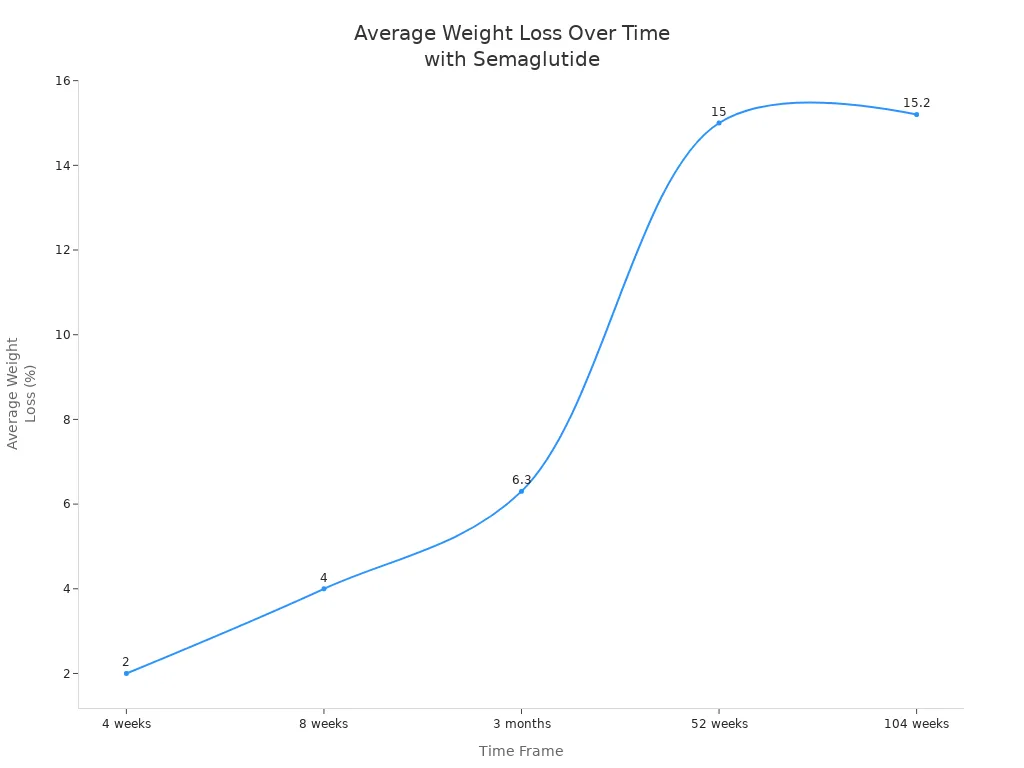
Note: Most people see the biggest changes in the first year. Weight loss may slow down after that, but you can still make progress.
On average, you can expect to lose about 10.9% of your starting body weight after six months of using weight loss injections like semaglutide. Some people lose more, while others lose less. Your results may depend on your starting weight, your dose, and how your body responds to the medicine.
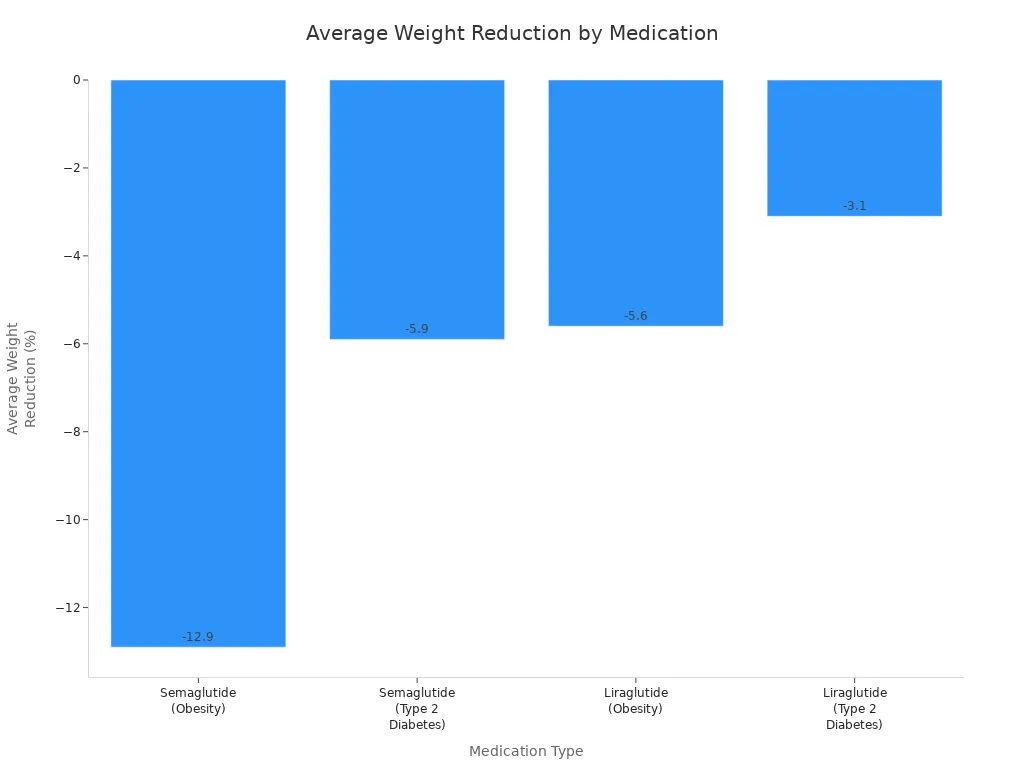
Long-term studies show that many people keep losing weight if they continue their injections for a year or more. The table below compares different medications and their results after one year:
Medication Type | Weight Loss Percentage (10% or more) | Average Weight Reduction (%) |
|---|---|---|
Semaglutide (Obesity) | -12.9% | |
Semaglutide (Type 2 Diabetes) | 23.1% | -5.9% |
Liraglutide (Obesity) | 28.6% | -5.6% |
Liraglutide (Type 2 Diabetes) | 12.3% | -3.1% |
Tip: If you stop taking your injections, you may regain weight. Studies show that most people return to their original weight within 10 months after stopping treatment.
Your results with weight loss injections can vary. Several factors play a role in how much weight you lose:
How quickly your stomach empties food can predict your weight loss. People with slower gastric emptying at five weeks often lose more weight by week sixteen.
If you lose more than 1 kilogram (about 2.2 pounds) in the first five weeks, you are likely to see better results later.
The amount of food you eat during meals matters. People who eat less during meals tend to lose more weight, especially if they do not have diabetes.
Lifestyle changes, such as eating healthier foods and being more active, can boost your results. You do not need to track every meal or workout, but paying attention to your habits helps.
Improving the quality of your food is important. Since these medicines help you eat less, choosing nutritious foods gives your body what it needs.
Strength training can help, but it may not always prevent muscle loss during rapid weight loss.
Patients who use prescription medications for weight loss often feel more satisfied than those who try to lose weight on their own. This is true for people with and without diabetes.
You can improve your results by setting goals beyond the scale. Focus on feeling stronger, moving more easily, and having more energy. These changes can help you stay motivated and enjoy the benefits of your journey.
You may notice some side effects when you start weight loss injections. Most people experience mild symptoms that improve over time. The most common side effects affect your stomach and digestion. Here is a table showing how often people report these effects:
Side Effect | Percentage of Participants |
|---|---|
Nausea | 40.2% |
Diarrhea | 20.9% |
Constipation | 20.0% |
Vomiting | 16.3% |
Dysgeusia | N/A |
Dysethesia | N/A |
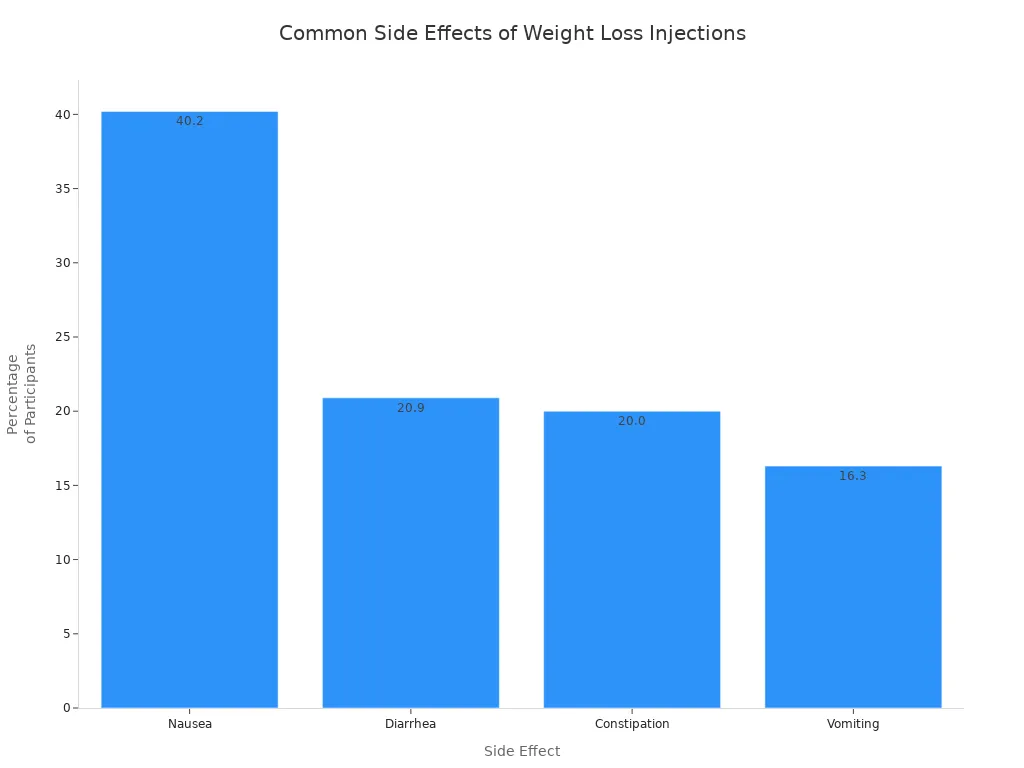
You might feel nausea or have changes in your bowel habits, such as diarrhea or constipation. Vomiting can also happen, but it is less common. These symptoms usually get better as your body adjusts.
Most people do not have serious problems, but you should know about rare risks. Some people develop pancreatitis, which is inflammation of the pancreas. This happens in about 0.1% to 0.3% of users. Gallbladder issues, like gallstones, occur in 1% to 2% of people and often relate to rapid weight loss. Rarely, you may have low blood sugar, especially if you take insulin. Kidney concerns can happen if you get dehydrated from stomach issues. Studies show no increased cancer risk in humans. In fact, these injections may lower your risk of heart attack and stroke if you have heart disease.
Incidence Rate | Notes | |
|---|---|---|
Pancreatitis | 0.1-0.3% | Stop use if you have severe abdominal pain. |
Gallbladder Issues | 1-2% | Linked to rapid weight loss. |
Hypoglycemia | <1% | Rare unless combined with insulin. |
Kidney Concerns | 0.4% | Stay hydrated to lower risk. |
Cardiovascular Events | Beneficial | May reduce risk of heart attack and stroke. |
Cancer Risk | No increased | No increased risk in humans. |
If you have severe stomach pain, yellow skin, or trouble urinating, call your doctor right away.
You can manage most side effects at home. Try these tips to feel better:
Eat smaller, more frequent meals. Avoid skipping meals.
Choose cool, bland foods like crackers or toast.
Avoid fatty, fried, or spicy foods.
Drink water or ginger tea between meals.
Stay active with daily exercise to help digestion.
Get enough sleep each night, about seven to eight hours.
Sip water or clear liquids if you feel nauseous.
Your healthcare provider will check your progress and side effects at regular visits. You may need to adjust your dose or get extra support, like a dietitian. Tracking your symptoms and habits can help you and your provider make the best plan for your health.
You might get weight loss injections if you meet certain health rules. Doctors look for people with a Body Mass Index (BMI) of 30 or more. You can also qualify if your BMI is 27 or higher and you have health problems like type 2 diabetes or high blood pressure. These injections work best when you also have healthy habits. You may start injections with lifestyle changes or after trying diet and exercise first. Doctors want you to lose at least 5% of your body weight in three months. If you do not lose 2.5% in one month, your doctor may ask you to make stronger changes.
Key points for eligibility:
BMI of 30 or more
BMI of 27 or more with health problems
Willing to change your habits
Your doctor will keep checking on you
Using weight loss injections early may help if you need to lose more than 5% of your weight before a medical procedure.
Some people should not use weight loss injections. Certain health problems and your medical history can make these medicines unsafe. Look at the table below to see if you are in any of these groups:
Medical Condition/Characteristic | Description |
|---|---|
Family history of thyroid cancer | Not allowed to use semaglutide |
Multiple Endocrine Neoplasia type 2 | Not allowed to use semaglutide |
History of pancreatitis | Higher risk with semaglutide |
Pregnant or breastfeeding | Safety is not clear |
Gastrointestinal disease | May make treatment harder |
Type 1 diabetes | Not right for injections |
Under 12 years old | Not allowed to use semaglutide |
You should also skip these injections if you have gallbladder disease or some thyroid problems. If you are pregnant or want to be, wait until after your pregnancy.
Doctors think about many things before giving you weight loss injections. They look at your BMI, your health history, and if you are ready to change your habits.
“Healthcare providers look at different things when deciding if someone should get weight loss injections, like BMI, health history, and if they are ready to make changes.”
You are a good choice if you want to get healthier and are ready to follow a plan. Weight loss injections are not a quick fix. They work best as part of a bigger health plan. Your doctor will help you decide if this is right for you and your goals.
You might wonder how these medicines compare. Ozempic, Wegovy, and Mounjaro all help with weight loss. They work in different ways and give different results. The table shows how much weight people lose on average in studies:
Medication | Average Weight Loss (%) | Average Weight Loss (kg) |
|---|---|---|
Mounjaro | 20.2% | 22.8 kg |
Wegovy | 13.7% | 15 kg |
Ozempic is like Wegovy but is mostly for diabetes. Wegovy and Mounjaro are approved for weight loss. Mounjaro usually helps people lose more weight. But it can cause more side effects.
The SURPASS-2 trial showed most side effects were alike for tirzepatide (Mounjaro) and semaglutide (Ozempic/Wegovy). But Mounjaro had a few more serious problems.
Medication | Common Side Effects |
|---|---|
Wegovy | Nausea, Diarrhea, Vomiting, Constipation, Belly pain, Indigestion, Dizziness, Bloated stomach, Burping/gas, Low blood sugar, Gastroenteritis, GERD, Headache, Fatigue, Nose and throat infections |
Ozempic | Nausea, Vomiting, Diarrhea, Belly pain, Constipation |
Mounjaro | Similar side effects but may be more and worse, with warnings for severe gastrointestinal disease. |
Ozempic does not have these warnings.
Both have FDA boxed warnings for thyroid gland tumors, including cancer.
Some people believe things about weight loss injections that are not true. Let’s clear up some common myths:
These medicines do not work right away. You still need to eat healthy and exercise.
Many people can get healthier by losing just 5% to 10% of their weight with better habits.
Dr. Peminda Cabandugama says these medicines are not magic. You still need to eat well and move more.
Safe weight loss is about one or two pounds each week. Losing weight too fast is not safe.
Most people handle side effects well. Serious problems do not happen often.
Tip: Work on healthy habits. Medicines work best when you use them with a good plan.
If you want to start, here are the steps:
Find a trained provider and write down your questions.
Meet for a checkup. Talk about your health, habits, and goals. You might get a physical exam and blood tests.
Get your first shot. Your provider will check your vital signs and talk about side effects. Change where you give the shot each week.
Go back for visits every four to six weeks. Your provider will see how you are doing and may change your treatment.
Weight loss shots can cost $1,300 or more each month. Insurance may or may not pay for them. Most plans only help if you meet strict rules for obesity or health problems. Medicare does not pay for these shots, so you might have to pay yourself.
Note: Always ask your provider about costs and insurance before you begin.
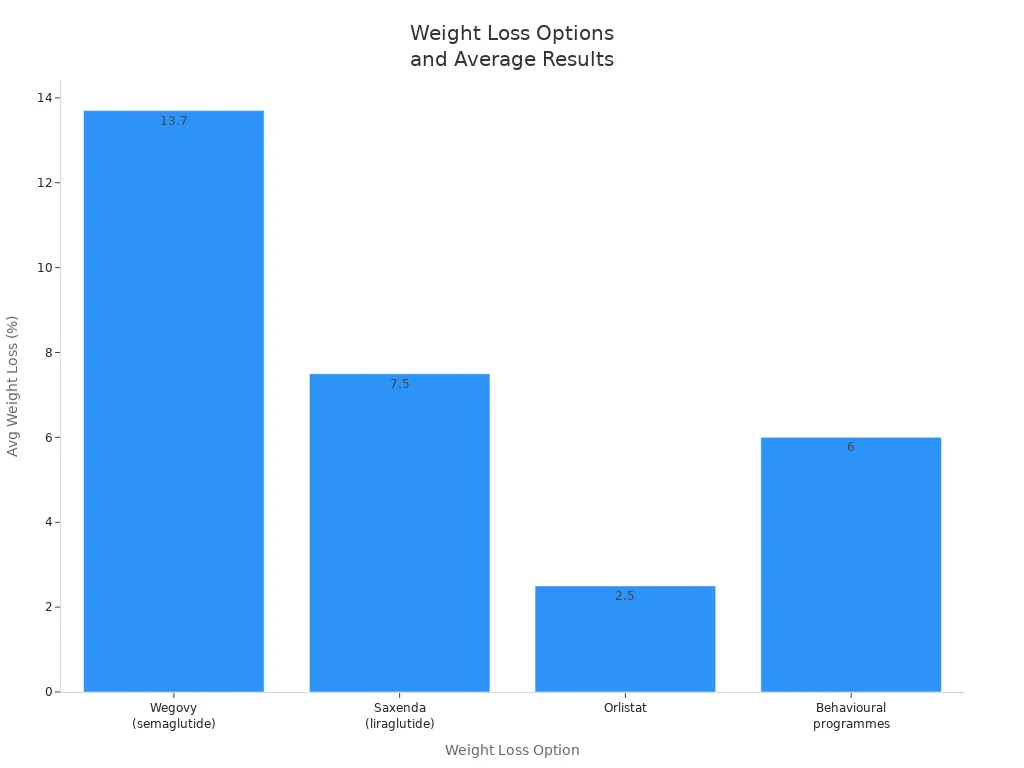
You have learned that weight loss injections like Ozempic, Wegovy, and liraglutide can help you lose 15% to 20% of your weight in one to two years. These medicines also improve heart and liver health. Always talk to your doctor before starting. You may also try other options, such as orlistat or behavioral programs, which help many people.
Weight loss is your journey. You can choose the path that fits you best. Ask your provider for advice and support.
You may notice less hunger within two weeks. Most people see weight loss after four weeks. Your results depend on your dose and habits.
Tip: Track your progress each week to stay motivated.
You can stop at any time, but you may regain weight quickly. Talk to your doctor before making changes.
Action | Result |
|---|---|
Stop injections | Possible weight gain |
You do not need a strict diet, but healthy eating helps you lose more weight. Choose foods high in protein, fiber, and vitamins.
Eat fruits and vegetables
Pick lean meats
Drink water
Doctors do not recommend these injections for anyone under 12 years old. Safety for teens is still being studied. Ask your provider for advice.
Note: Always check age guidelines before starting treatment.